Cart is empty












 Click on the mark for details.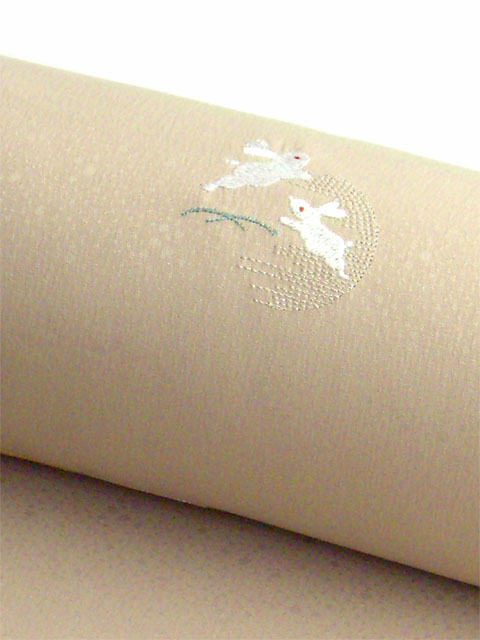


Please sign in so that we can notify you about a reply
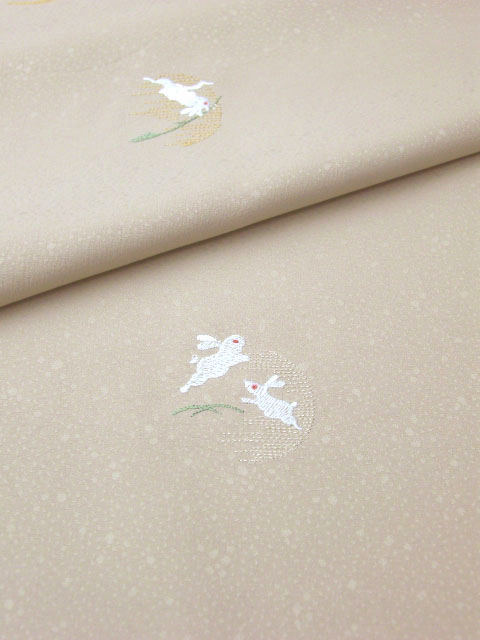
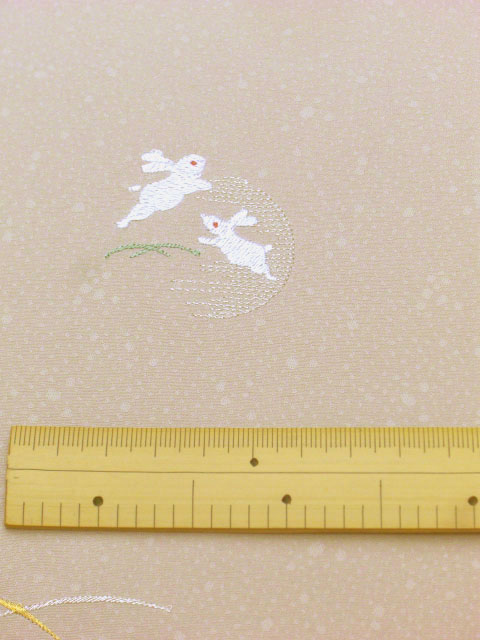

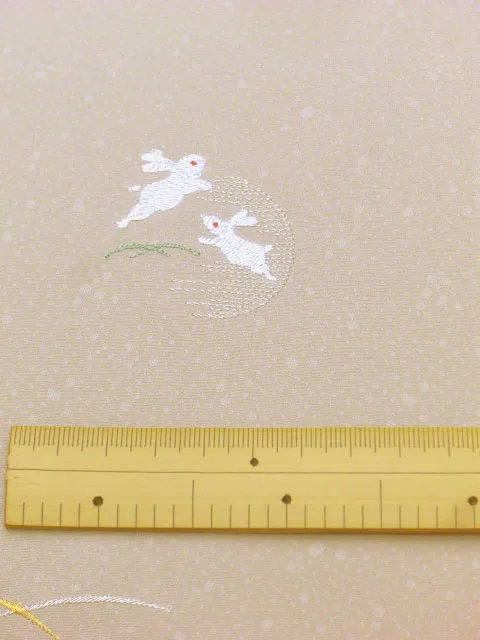
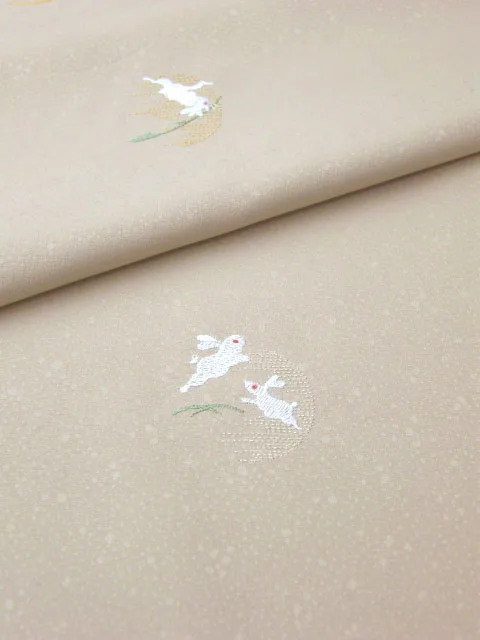
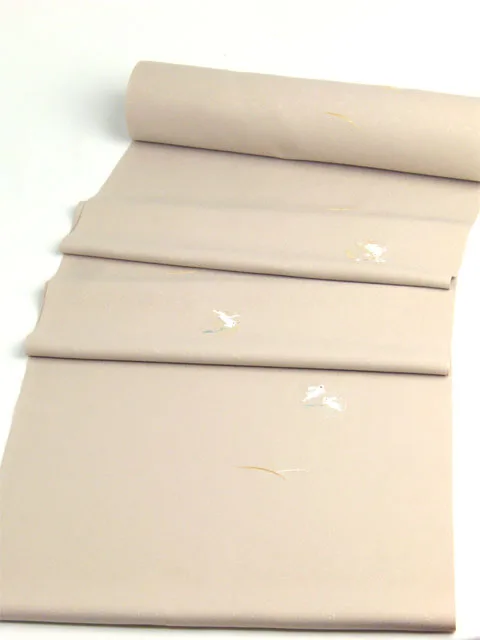
Washable Embroidered Komon Kimono — Shirocha (Rabbit and Moon Pattern), Deodorizing Fabric
Product Features
- Product: Washable embroidered komon kimono
- Color / Pattern: Shirocha (soft, tea-tinged beige) ground with a rabbit and moon pattern
- Material: 100% polyester (Kuraray photocatalytic fabric, Shine Up)
- Type: Women's all-over embroidered komon kimono
- Feature: Machine-washable at home, with built-in photocatalytic odor control
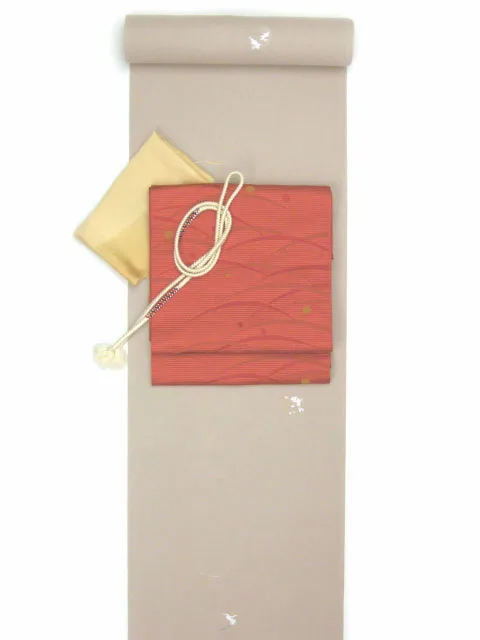
- Fabric width: approx. 42cm (tall-size compatible) / Fabric length: 13.5m
- Fabric price: ¥38,500 (tax included) / ¥35,000 (tax excluded)
Set against a calm shirocha ground, this piece depicts rabbits at play beneath the moon — a charming design with a touch of storybook wonder. The rabbit-and-moon motif appears often in traditional Japanese design and evokes the quiet, poetic mood of moon-viewing. Its gentle, understated coloring makes it easy to wear across a wide range of ages.
The fabric is Kuraray's photocatalytic fabric, Shine Up. Skilled artisans in Kyoto hand-embroider each piece with thread matched to the solid-dyed base color, finishing it with a refined, elegant look. Since it's 100% polyester, it can be machine-washed at home, making it easy to care for.
About the photocatalytic odor control
This fabric was developed jointly by Kuraray Co., Ltd. and Takeda Pharmaceutical Company, using a specialized deodorizing agent. Its dual mechanism — chemical adsorption and a photocatalytic reaction — is effective against a wide range of odors, including cigarette smoke, sweat, pet odors, and odors from decomposition. Because the deodorizing agent is blended directly into the fiber itself, the effect holds up over repeated washing, and since the photocatalytic reaction has no saturation point, it continues to work as long as odor-causing compounds are present.
Suggested occasions
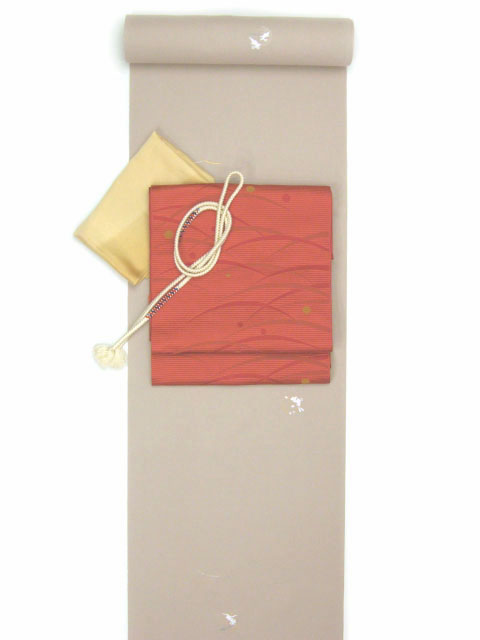
Depending on how you pair it with an obi, obiage, and other accessories, this kimono works well for settings ranging from a tea ceremony to a party or an everyday outing. The soft shirocha tone and the charming rabbit-and-moon motif suit the autumn moon-viewing season especially well, while still being easy to wear year-round.
Who and what this is best for
- Anyone looking for a slightly more formal look for a tea ceremony
- Those who want to enjoy an embroidered, refined komon kimono as everyday wear too
- Anyone drawn to charming, storybook-like motifs such as rabbits and the moon
- Anyone concerned about odors such as cigarette smoke or pet smells on their kimono
- Those who prefer an easy-care, machine-washable kimono
Tailoring, sizing, and total cost
This page is for the fabric bolt itself (¥38,500). If you'd like it tailored into a wearable kimono, tailoring is available for an additional fee, as follows:
- Unlined (hitoe) tailoring: +¥20,000 (total with fabric: ¥58,500)
- Unlined tailoring with an ishikiate (hip lining): +¥21,500 (total with fabric: ¥60,000)
- Lined (awase) tailoring: +¥22,000 (total with fabric: ¥60,500)
If you'd like a custom size outside our standard size chart, an additional +¥500 applies on top of the totals above (for example, unlined tailoring at a custom size comes to a total of ¥59,000). This fabric is tall-size compatible, so it can accommodate taller customers as well. For details on tailoring and sizing, please see our tailoring and measuring guide, or contact us with your preferred tailoring and measurements.
Note: due to the nature of embroidery, slight puckering may occur around the stitched areas. Thank you for your understanding.
Frequently Asked Questions
Q. Can I wash this at home?
A. Yes. Since it's 100% polyester, it can be cared for in your home washing machine.
Q. How long does the photocatalytic odor control last?
A. Since the deodorizing agent is blended directly into the fiber, the effect holds up over repeated washing. The photocatalytic reaction has no saturation point, so it continues to work as long as odor-causing compounds are present.
Q. What occasions is this kimono suitable for?
A. Depending on how you pair it with an obi and other accessories, it works well for anything from a tea ceremony to a party or an everyday outing.
Q. How much does tailoring cost?
A. Unlined tailoring is +¥20,000 (+¥21,500 with an ishikiate hip lining), and lined tailoring is +¥22,000. Including the fabric itself (¥38,500), the total comes to approximately ¥58,500 for unlined, ¥60,000 for unlined with ishikiate, or ¥60,500 for lined. A custom size outside our standard size chart adds a further +¥500 to any of these totals.
Q. Can this be tailored for a taller person?
A. Yes. This fabric is tall-size compatible, making it easier to tailor for taller customers. Please contact us for specific sizing.
Q. How is this different from the shikishi or hanamaru patterns?
A. These are all part of the same fabric and price range, but with different patterns. The shikishi pattern is based on traditional poem cards, the hanamaru pattern is an auspicious motif of flowers gathered into circles, and this rabbit-and-moon pattern has a more storybook, moon-viewing feel. Choose whichever pattern you like best.
【詳細】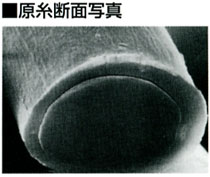
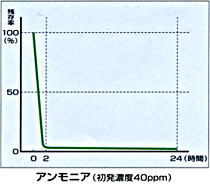
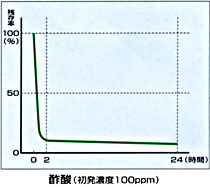
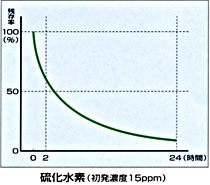
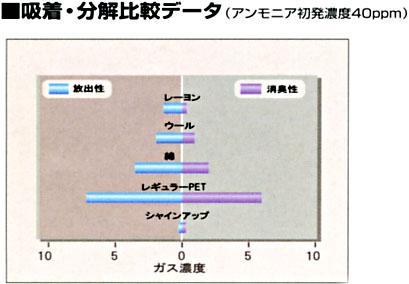
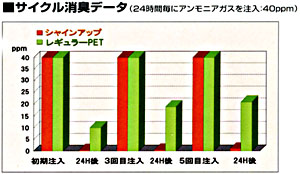
※『レギュラーpet』とは通常のポリエステルの事です。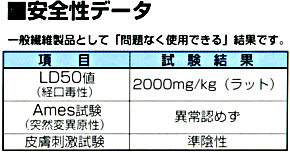
【詳細】
Size and Tiloring
- Tiloring Kimon with Lining Type1~8
- Tiloring Kimon without Lining Type1~8
- Tiloring Haori coat with Lining Type1~5
- Tiloring Haori coat without Lining Type1~5
- Custom orders are also possible
Standard reference measurements for tailoring: Women's kimono
(Length measured from the back / Unit: cm)
- Type 1: Length from the kimono's neck to the hem 153 · Yuki (from neck bone to wrist) 64
- Type 2: Length from the kimono's neck to the hem 158 · Yuki (from neck bone to wrist) 66
- Type 3: Length from the kimono's neck to the hem 163 · Yuki (from neck bone to wrist) 68
- Type 4: Length from the kimono's neck to the hem 168 · Yuki (from neck bone to wrist) 70
- Type 5: Length from the kimono's neck to the hem 173 · Yuki (from neck bone to wrist) 72
- Type 6: Length from the kimono's neck to the hem 153 · Yuki (from neck bone to wrist) 64.5
- Type 7: Length from the kimono's neck to the hem 158 · Yuki (from neck bone to wrist) 66
- Type 8: Length from the kimono's neck to the hem 163 · Yuki (from neck bone to wrist) 67.5
Standard reference measurements for tailoring: Women's haori
(Length measured from the back / Unit: cm)
- Type 1: Length from the haori's neck to the hem Longer 95 / Shorter 89 · Yuki (from neck bone to wrist) 69.5
- Type 2: Length from the haori's neck to the hem Longer 97 / Shorter 91 · Yuki (from neck bone to wrist) 71.5
- Type 3: Length from the haori's neck to the hem Longer 100 / Shorter 94 · Yuki (from neck bone to wrist) 73.5
- Type 4: Length from the haori's neck to the hem Longer 102 / Shorter 96 · Yuki (from neck bone to wrist) 75.5
- Type 5: Length from the haori's neck to the hem Longer 105 / Shorter 98 · Yuki (from neck bone to wrist) 77.5
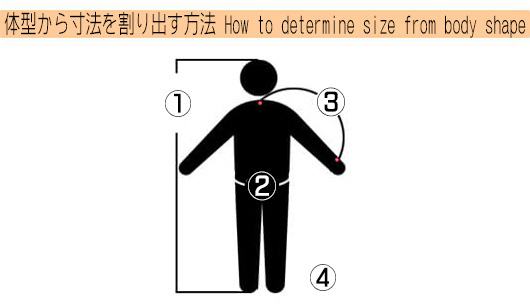
- ①「身長」/「hight」
- ②「ヒップ」または「胴回り」/「hip」or 「girth」
…胴囲の一番大きい部分です。
It is the largest part of the waist circumference. - ③「裄(ゆき)」/「Length of sleeve」
…腕を水平から下に30度まで上方に上げて、
首の後ろの骨のあたりから手首の骨まで。
首の骨のぐりぐり(第七頸椎の後ろ)から手首の骨のぐりぐりまで。
Raise your arms up to 30 degrees below horizontal, From around the back bone of the neck to the wrist bone. From the neck bone gouge (behind the seventh cervical vertebra) to the wrist bone gouge. - ④「体重」/「weight」
※襦袢の裄丈は着物の裄丈に対し約5mm短くなります。
*The sleeve length of the juban(kimono underwear) is about 5mm shorter than the sleeve length of the kimono.
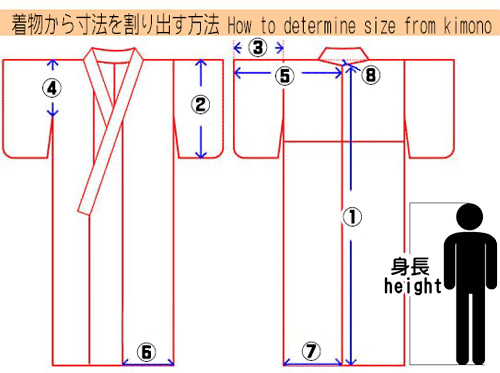
お手持ちの着物に合わせた着物や長襦袢を作りたい方は、ご自身の【身長】と、
上記図を参考に、その着物の、【①身丈・②袖丈・③袖幅・④袖付・⑤裄・⑥前幅・⑦後幅】の合計8つのサイズおを教えください。
If you want to make a jyuban(kimono underwear) that matches your kimono, please tell us your [height] and Refer to the diagram above to 【①determine the length, ②sleeve length, ③Length of sleeve, ④Width of the sleeve's seam, ⑤Length of sholder and sleeve, ⑥front width, and ⑦back width】 of the kimono.Please let me know the total 8 sizes.
※襦袢の裄丈は着物の裄丈に対し約5mm短くなります。
*The sleeve length of the juban(kimono underwear)is about 5mm shorter than the sleeve length of the kimono.