Cart is empty












 Click on the mark for details.



Please sign in so that we can notify you about a reply
Temperature Regulating Material "Outlast®"
1. Maintains the Ideal Surface Temperature of 32+-1℃
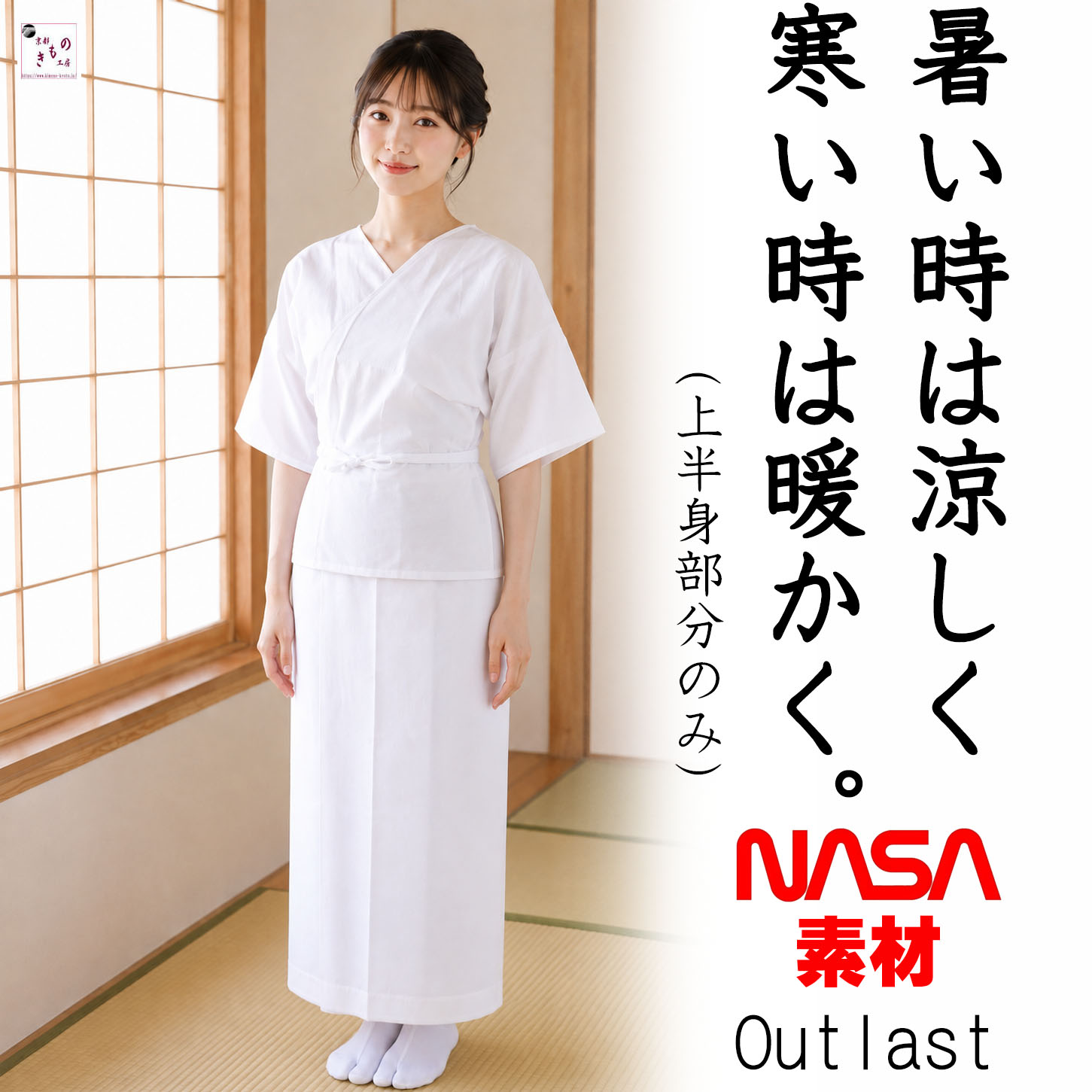
Outlast is a cutting-edge temperature-regulating material originally developed for NASA.
- Controls Skin Surface Temperature: Whether it is hot or cold, it works to maintain the skin’s surface temperature within the range humans find most comfortable 31℃ to 33℃.
- Direct Approach: Instead of reacting to the outside air or internal body temperature, it acts directly on the skin's surface temperature to create an ideal environment for comfort.

2. How It Works (Paraffin Wax)
The secret to its temperature regulation lies in microscopic "microcapsules" measuring between 2 and 30 microns.
- When Hot: The microcapsules absorb excess heat from the body.
- When Cold: The capsules release the heat they have stored.
This cycle of heat absorption and release ensures that the perceived temperature is constantly controlled for comfort.

3. Comparison with Standard Materials

The thermography and graphs in the image demonstrate a clear difference compared to standard materials.
- Graph Analysis: Wearers of hoodies made with Outlast show a more stable skin surface temperature after environmental changes compared to those wearing regular hoodies.
- Thermographic Comparison:
- In Cold Conditions: Underwear using Outlast keeps the body’s surface temperature higher than standard materials.
- In Hot Conditions: Underwear using Outlast keeps the body’s surface temperature lower than standard materials.
size
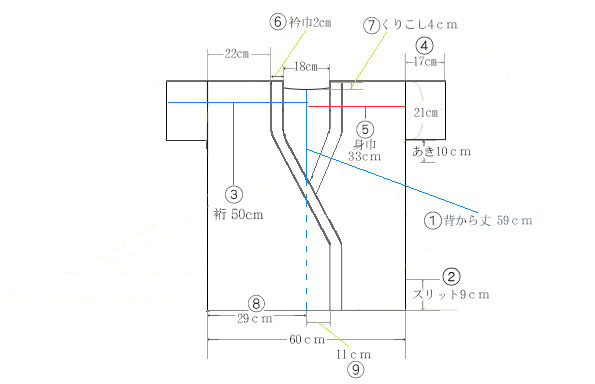
- From the top of the back center to the hem:59cm
- Slit:9cm
- From the center back of the neck to the tip of the sleeve:50cm
- From the seam between the sleeve and the body to the end of the sleeve:17cm
- From the center of the back to the seams of the sleeves and body:31cm
- Collar width:2cm
- Kurikosi (The length of the lower part at the back of the neck):4cm
- Maehaba (From the side seam to the seam under the collar):29cm
- Okumi (From the seam under the collar to the front edge):11cm
Frequently Asked Questions
- Q.What is Outlast?
- A.This is a temperature-regulating material that originated from NASA's technology research. The paraffin wax inside microcapsules absorbs extra heat, and when it gets cold, it releases the stored heat to try to keep your skin surface temperature in a comfortable range (31–33°C). It's not a heat-generating material, and how you feel it may vary from person to person.
- Q.Is it easy to move if worn under kyudo or iaido clothing?
- A.It's made of thin fabric, feels light and breezy, and keeps a comfortable temperature, so it's easy to move around in.
- Q.Can it be used not just in summer, but in winter too?
- A.Outlast is a material that absorbs heat when it's hot and releases it when it's cold, so you can use it all year round.
- Q.Can underwear for traditional Japanese clothing made with Outlast material be washed?
- A.When washing, you can use a gentle cycle with water below 40°C. Do not use a dryer or drying mode.
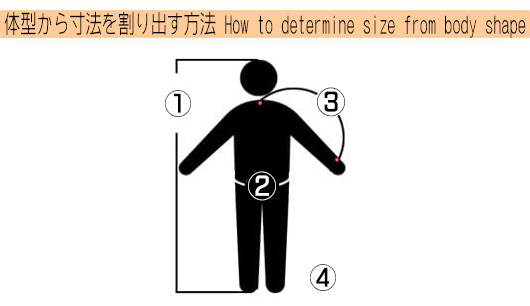
- ①「身長」/「hight」
- ②「ヒップ」または「胴回り」/「hip」or 「girth」
…胴囲の一番大きい部分です。
It is the largest part of the waist circumference. - ③「裄(ゆき)」/「Length of sleeve」
…腕を水平から下に30度まで上方に上げて、
首の後ろの骨のあたりから手首の骨まで。
首の骨のぐりぐり(第七頸椎の後ろ)から手首の骨のぐりぐりまで。
Raise your arms up to 30 degrees below horizontal, From around the back bone of the neck to the wrist bone. From the neck bone gouge (behind the seventh cervical vertebra) to the wrist bone gouge. - ④「体重」/「weight」
※襦袢の裄丈は着物の裄丈に対し約5mm短くなります。
*The sleeve length of the juban(kimono underwear) is about 5mm shorter than the sleeve length of the kimono.
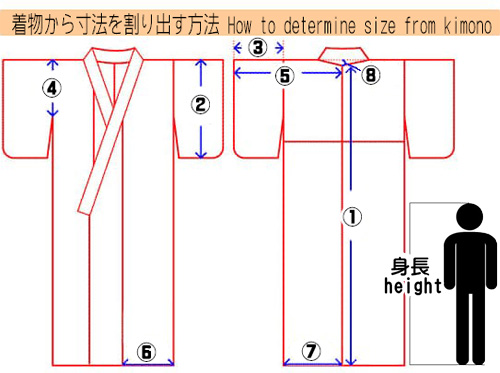
お手持ちの着物に合わせた着物や長襦袢を作りたい方は、ご自身の【身長】と、
上記図を参考に、その着物の、【①身丈・②袖丈・③袖幅・④袖付・⑤裄・⑥前幅・⑦後幅】の合計8つのサイズおを教えください。
If you want to make a jyuban(kimono underwear) that matches your kimono, please tell us your [height] and Refer to the diagram above to 【①determine the length, ②sleeve length, ③Length of sleeve, ④Width of the sleeve's seam, ⑤Length of sholder and sleeve, ⑥front width, and ⑦back width】 of the kimono.Please let me know the total 8 sizes.
※襦袢の裄丈は着物の裄丈に対し約5mm短くなります。
*The sleeve length of the juban(kimono underwear)is about 5mm shorter than the sleeve length of the kimono.